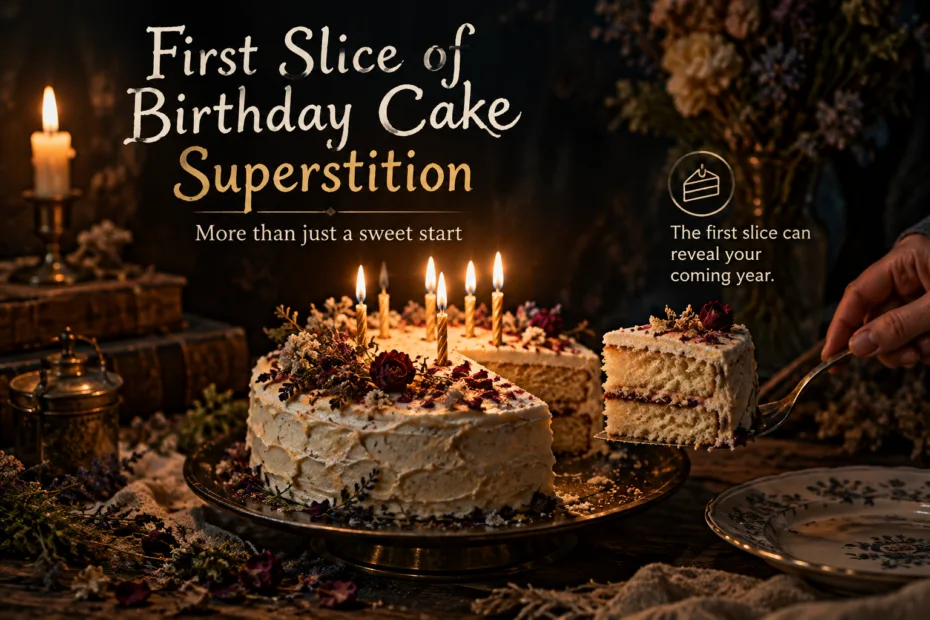
Giving the first slice of a birthday cake to someone deeply loved is a tradition associated with Brazilian birthday celebrations. The gesture identifies a person who holds a special place in the celebrant’s life. In the folk belief surrounding the custom, offering the first piece is associated with expressing affection and strengthening the bond between the giver and recipient.
Why the First Slice Is Given to Someone Special
In the Brazilian custom, the birthday person chooses someone important to receive the first piece of cake. Rather than keeping the first serving, the celebrant offers it to a parent, grandparent, sibling, partner, close friend, or another cherished person.
The first slice carries a meaning that later servings do not necessarily share. It represents a public expression of affection, gratitude, or respect. The recipient is recognized as someone particularly dear to the person celebrating the birthday.
This practice is sometimes described in Portuguese as giving the primeiro pedaço do bolo, meaning the first piece of cake, to someone special. The choice can become a memorable moment because guests may be waiting to see who receives it.
The birthday person gives the opening slice to someone they love or wish to honor. The act expresses the importance of that relationship, while interpretations that it strengthens love belong to the symbolic meaning attached to the custom.
How the First-Slice Tradition Is Practiced
The custom usually takes place after the birthday song and the blowing out of the candles, when the cake is ready to be served.
The celebrant cuts the cake, chooses the recipient, and offers that person the first slice. Some families announce the recipient before handing over the piece, while others simply make the gesture.
The choice is not necessarily romantic. A child might select a mother or father, an adult might choose a spouse, and someone celebrating with friends might honor a person who has offered particular support or kindness.
There is no fixed rule requiring the first slice to go to the oldest relative, a romantic partner, or the same person every year. Family expectations may influence the decision, but the celebrant’s choice is an important feature of the practice.
Love, Affection, and the First Piece
The connection between the first slice and love comes from the meaning assigned to the recipient. Sharing the first piece can be understood as showing that a relationship deserves special recognition.
Some descriptions interpret the gesture as a way of reinforcing affection and closeness. However, the documented Brazilian custom is more firmly supported as an expression of love and respect than as a supernatural promise that affection will increase after the cake is shared.
Receiving the first piece may feel especially meaningful because the choice is made in front of family and friends. It can also create an expectation that a particular loved one will be selected, especially when families repeat the custom over many birthdays.
The tradition does not require a spoken blessing, a declaration of love, or a prediction about the relationship’s future. Its meaning is primarily conveyed through the choice of recipient.
The First-Slice Custom in Brazilian Birthday Celebrations
The practice has been described in Brazilian accounts of birthday celebrations as a familiar way to honor someone close to the celebrant.
In a 2013 study of a children’s birthday celebration in Rio de Janeiro, Eduardo José Diniz described the special status of the first slice. His account explains that the birthday person, whenever possible, serves that piece to the most important and beloved person present. He also observes that choosing among close relatives can create expectations, with the mother frequently receiving the honor in the setting he discusses.
Brazilian descriptions published in subsequent years also identify the first piece as a gesture of affection. A 2021 news account, for example, documented a child choosing to give the first slice to sanitation workers whom he especially appreciated. The recipient therefore need not be a family member.
These accounts establish that the custom has been practiced and recognized in Brazil. They do not establish its exact date of origin, whether every Brazilian family observes it, or a universal belief that the gesture produces a supernatural change in a relationship.
Although popular videos have helped introduce the practice to international audiences, such recordings document individual celebrations. They cannot establish when the tradition began.
When the Birthday Person Must Eat the First Slice
A separate birthday superstition assigns the first piece to the person celebrating the birthday. In this version, receiving or eating the first slice is believed to bring good luck. Some accounts also connect it with the fulfillment of a birthday wish.
The rule may require the celebrant to cut and eat the first piece, or simply to take the first bite before anyone else. Unlike the Brazilian gift-giving custom, the lucky action centers on the birthday person’s own participation.
A family tradition documented by the USC Digital Folklore Archives in May 2026 describes a Miami household in which the birthday person must take the first slice. Refusing it is considered bad luck, even if the celebrant does not want cake. This record concerns the first-slice luck belief, not the Brazilian practice of giving the piece to a loved one.
| First-Slice Tradition | Who Receives the First Piece? | Associated Meaning |
|---|---|---|
| Giving the first slice to a loved one | Someone chosen by the birthday person | Affection, honor, and recognition of a close relationship |
| Eating the first slice for luck | The birthday person | Good luck, avoiding misfortune, or a favorable birthday wish in some versions |
The two traditions may look similar during the cake-cutting ceremony, but the expected action is different. One gives the first serving to someone important; the other reserves it for the celebrant.
The First Slice and Birthday Wishes
The first-slice tradition can occur alongside the familiar birthday wish ritual, in which a person makes a wish before blowing out birthday candles.
The wish associated with candles concerns a hoped-for outcome, while the Brazilian first-slice custom concerns the person selected to receive the cake. Both may take place during the same celebration without sharing the same folk meaning.
In some family traditions, eating the first piece is connected with the birthday wish coming true. That interpretation belongs to the first-slice luck superstition and should not automatically be applied to the custom of giving the first piece to a loved one.